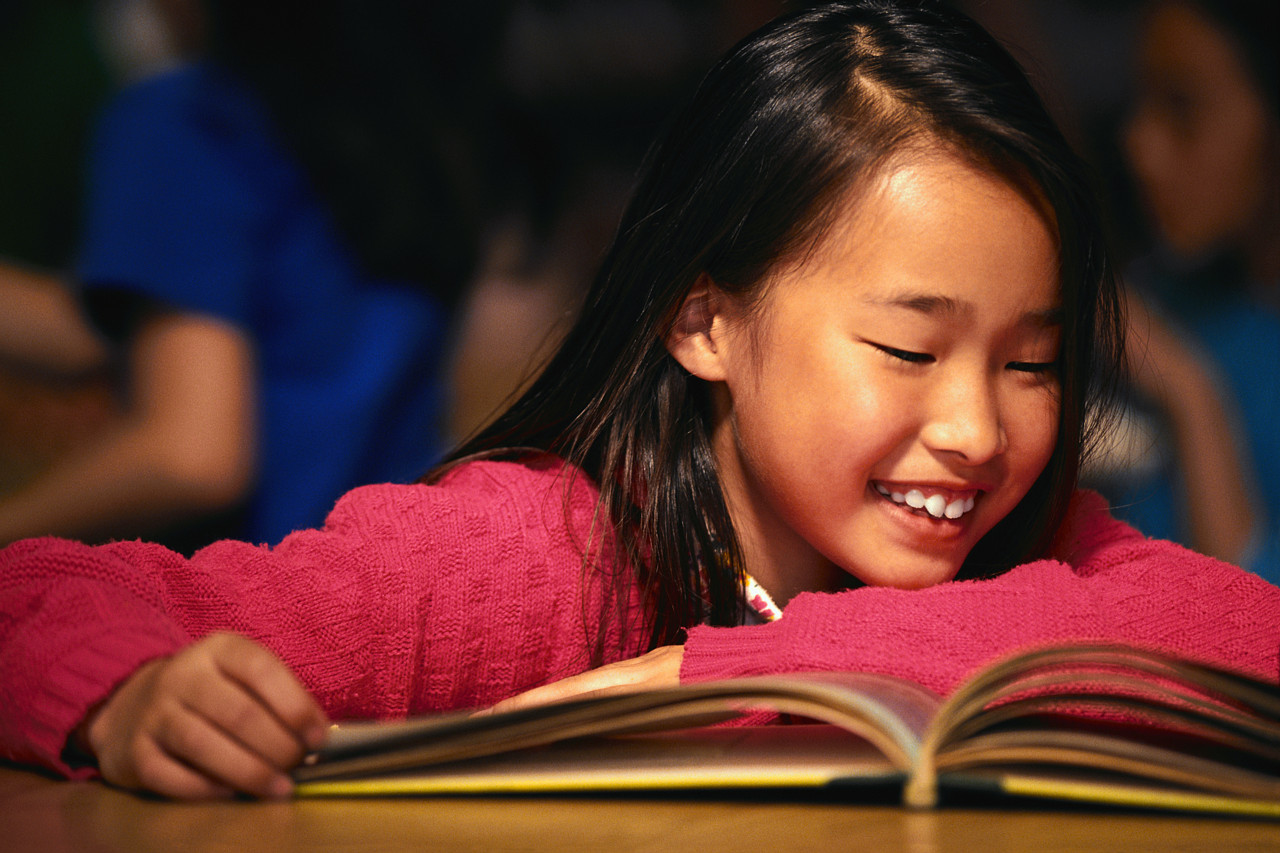
In addition to our free e-mails, which teachers read to their students and post on bulletin boards, Partners in Kindness provides Free PDF excerpts from our book as well as a special rate for our books for schools that are interested in integrating the material into their curriculum.

Below is the outline for a free curriculum designed to inspire students to do good and teach them important skills in the process. 

Please tell us how you are using our material in your school and contact us for further information at info@PartnersInKindness.org


A Daily Dose of Kindness
Empowering Students to Do Good
A Proposal for a Classroom Curriculum

I. The Need

The purpose of this project is to inspire young people to have dreams for the future and to give them the confidence and the skills they need to pursue those dreams.   

While the curriculum will benefit all students, it will make a crucial difference in the lives of students who live in communities where poverty and violence are common. Jacqueline Jordan Irvine illustrates this point in the address she presented on the campus of Howard University on November 3, 1999 which was reprinted in The Journal of Negro Education:

Several years ago, I had a brief conversation with a nine-year-old African American boy that I want to share with you. I was sitting on the steps of my church in a working-class Atlanta neighborhood, waiting for the locksmith to open my car, when an inquisitive little boy spotted me and jumped on his bike to get a closer look. After persuading him that he did not have to break into my car to retrieve my keys, I asked my new friend, Darius, to sit down and talk. I asked him the usual boring questions that adults ask children: "What's your name? How old are you? Where do you go to school? What's your teacher's name?" Finally, I asked, "What do you want to be when you grow up?" After responding quickly to the other questions, he stalled on the last, and said, "I don't wanna be nothing." "Oh, come on," I said. "There are so many wonderful and exciting things to dream about-being a teacher, an astronaut, a businessman, a mechanic, a policeman. Just close your eyes and let me know what you see yourself doing when you get to be all grown up."


Darius hesitantly followed my directions. He closed his eyes, folded his arms over his chest, and lifted his head toward the sky as if he needed divine inspiration for such a difficult task. After 15 seconds of what appeared to be a very painful exercise, I interrupted Darius's concentration. "What do you see?" I asked impatiently. "Tell me about your dreams." The young boy mumbled, "Lady, I don't see nothing, and I don't have no dreams." Stunned by his remark, I sat speechless as Darius jumped on his bike and rode away.


Darius, this bright, energetic, handsome young man, is not likely to end up at Howard University. In fact, statistical data predict that Darius has a better chance of ending up in a jail, where African American men now represent 41% of the prison population. By the way, if Darius ends up in prison, taxpayers will spend more than $25,000 a year for his upkeep. For that amount of money, we could pay his college tuition at almost any institution of higher education.


Sometimes we forget that a large number of children, like Darius, "don't see nothing and don't have no dreams" when we ask them to envision the future. These are the children whose nightmares occur both night and day (Hughes, 1999). At night, the villains are creatures in horror movies and in books like Goosebumps. Like all other children who have bad dreams, Darius is rescued by daylight. But Darius, unlike other children, has "daymares," if you will. Ghosts and demons haunt and chase him as part of his daily life, and daylight offers no reprieve from fear. Ironically these daytime horrors are scarier than nightmares. The duress does not end when Darius opens his eyes. Daymares have no scary faces, just scary effects: poverty, violence, hunger, poor health, drug addiction, poor school performance, insensitive policies, and privileged people who sigh in collective hopelessness and hostility wondering where Darius's absent father is and blaming Darius's young mother for apparently having a baby she can neither raise nor afford.


I have spent my entire career at Emory University researching and writing about the school experiences of African American children like Darius, their schools, and their teachers…


The … challenge that each of us faces is that we will not and cannot achieve our personal or collective vision by ignoring children who have none. It is not enough to think of Darius as a research subject, a service project, a sick or jailed client, a paper topic, or just another child in your class who is doomed to fail. Somehow we must start to think of him and our future as inextricably linked. Like the teachers I described, we must become dream keepers for children who talk about dying instead of living, and who actually plan their funerals and not their futures.

II. Goals

  • Inspire kids to have dreams for their future.
  • Show them that dreams are obtainable.
  • Show them that every person can make a difference.
  • Show them that our biggest challenges are sometimes what lead us to greatness and that challenges in life can lead to good.
  • Expand their understanding of diversity.  By showing them other cultures it helps them to appreciate their own.
  • Give them hope for peace.
  • Teach them the skills to transform dreams into reality:

III. Skills Taught

  • Reading

  • Writing

  • Law

  • Public Relations

  • Social Networking for Social Good

  • Internet Filmmaking

IV. Time Requirements

Anywhere from a few days to a few weeks or even a few months. Writing assignments, presentations and projects can vary greatly in length depending on what the teacher chooses.  All activities are optional

V. Activities

A. The Power of Kindness - View the video Awakenings with Robin Williams

Essays and class discussion about the power of kindness to change a person’s personality

B. A Chain Reaction of Kindness - Read a free excerpt from the book Pay It Forward by adapted for students (http://www.payitforwardfoundation.org/exerpt.html). Essays and class discussion about the power of one person to change the world and the possibility of spreading kindness in a chain reaction.

C. Responding to Tragedy with Kindness - Read free excerpts from the book A Daily Dose of Kindness by Shmuel Greenbaum which will be available online. After Shmuel Greenbaum’s wife was killed by a suicide bomber in a Jerusalem restaurant, he responded to his tragedy not with hatred and anger, but by teaching the world kindness through the personal stories of every day people. His Partners in Kindness website sends thousands of kindness e-mails to subscribers directly which are reprinted in hundreds of publications reaching millions of readers. 

D. Seeing Kindness in our Lives - Writing assignment – two classes will write short essays (between 1 and 3 paragraphs) about an inspiring act of kindness they saw, heard or read about. The students’ names will not be written on the essays, only an id number.  Each day students from each class will read essays out loud from the other class and the students will either discuss or write a few sentences about the effect the story had on them.  This feedback will be sent back to the author in the other class.  After all the essays are read and the students receive feedback from the other class, the class discusses what they gained from this exercise.

E. Putting All the Pieces Together - Speaking engagement with Shmuel Greenbaum – “Seeing the Good in a World that Focuses on the Bad.”  Questions with Shmuel, discussions and essays.

F. Social Networking and YouTube - The greatest learning experience is one where the children themselves are so excited about what they are learning that they use it to teach others.  The curriculum will teach skills in YouTube and other social networking websites.  Students will use these tools to share their excitement for the curriculum and encourage other schools to join.

G. Law – At the very beginning of the class, students will be taught about the legal issues and other dangers involving YouTube, Social Networking and Press Conferences. Students will be taught about legal issues involving events taking place in the school and what can be done to avoid legal problems.

H. Press conference -A public relations expert from a large public relations firm will teach the students how to organize a press conference.  The students will organize a press conference during which they will explain how the curriculum helped them and encourage other schools to teach it. The plan is to have several schools studying the curriculum in different cities around the world at the same time and to have a simultaneous international press conference uniting all the students.


For further information please contact
Shmuel Greenbaum at
info@PartnersInKindness.org